Apprenticeships strengthen workforce readiness across the construction and mining industries
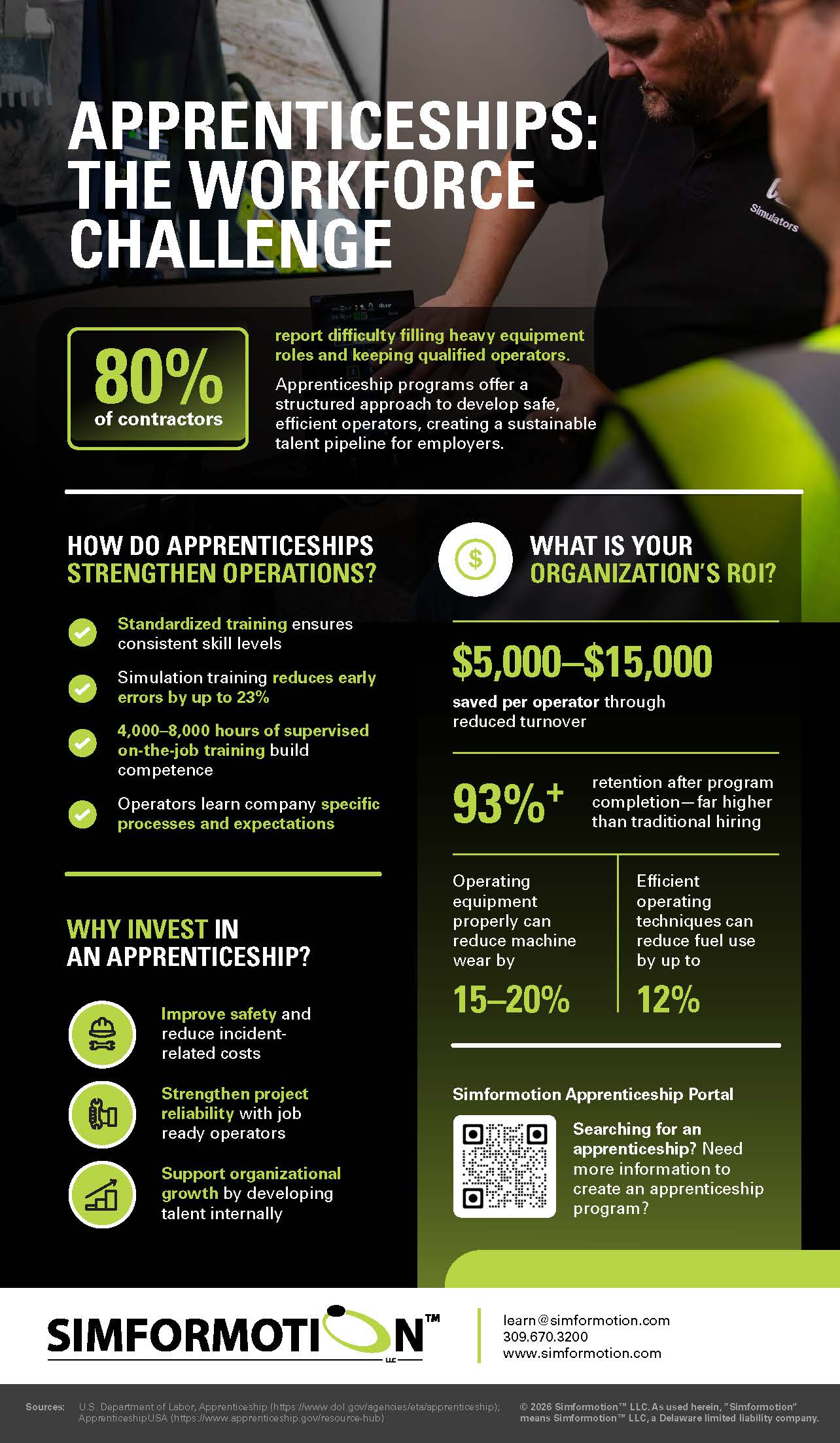
As companies across North America face labor shortages and increased competition for skilled workers, apprenticeships have become one of the most effective ways to build a reliable workforce. Rather than competing for a limited pool of experienced operators, employers can develop talent from within through structured, hands on training.
A key advantage of apprenticeships is the ability to tailor training to a company’s specific needs. Instead of relying on applicants who may or may not have the right background, employers can design programs that teach the exact skills required for their operations. Apprentices learn company processes from day one, reducing the learning curve and helping them reach productivity sooner.
Construction and Mining Industries Benefit
The construction and mining industries are seeing some of the biggest returns on their investments from today’s apprenticeship programs. Both industries face labor shortages, increasingly advanced equipment and rising safety expectations. Apprenticeships offer a practical, scalable solution by developing skilled operators who are prepared for the realities of high-risk work sites.
Construction companies rely on apprenticeships to develop a reliable pipeline of heavy equipment operators. Apprentices learn company-specific processes early, understanding expectations and safety protocols from the start. Mining operations benefit similarly. As equipment becomes more advanced and safety standards more rigorous, apprenticeships prepare workers for roles demanding technical skill, situational awareness and decision-making. These programs strengthen the workforce by improving onboarding, safety, equipment maintenance, and efficiency, as well as training employees to operate machinery using new technologies correctly.
Training Apprentices Safely and Effectively Using Simulators
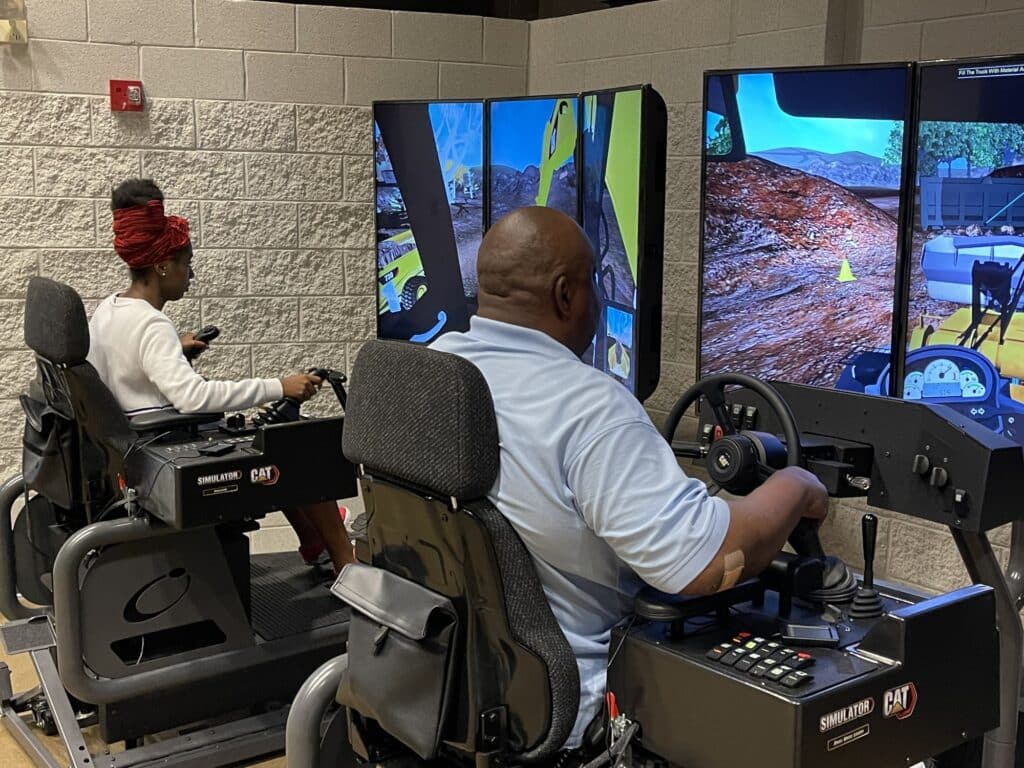
Many employers, colleges, and technical schools are strengthening their apprenticeship programs by integrating simulation-based training tools such as Cat® Simulators. These systems allow learners to practice operating equipment safely and consistently before stepping onto an active jobsite. Simulation provides a controlled environment for learning machine skills, ensures consistent instruction across instructors, reduces risk during early training and builds confidence before apprentices operate real equipment.
Employers can also track an apprentice’s progress using measurable benchmarks within the simulator system. With a stronger foundation, apprentices transition to real equipment more smoothly and reach productivity sooner.
Partnerships between employers and schools further strengthen this pipeline. Schools build foundational skills through simulation, while employers provide advanced on‑the‑job training. Programs such as C.W. Matthews Contracting Company’s apprenticeship in Georgia demonstrate how simulation prepares apprentices for real jobsites with greater readiness, safety awareness and skill.
“Cat Simulators are the main focus of the program because the simulators are so authentic to the real equipment,” explained Jeremy Whitaker, C.W. Matthews Director of Training & Recruitment. “Students are familiar and comfortable with the real machines because of the time they’ve spent learning and practicing on the simulators. Transitioning from the simulator to the real equipment is like putting on a comfortable pair of boots that you’ve broken in. The students are able to make an impact in the field on day one.”
Not Sure How to Start an Apprenticeship Program?
The Simformotion Apprenticeship Portal provides employers with a clear roadmap for building a program from the ground up. It guides organizations through essential planning steps, including defining job roles, outlining competencies, structuring on-the-job training, and integrating simulation-based learning with Cat Simulators. The portal also offers support with compliance, documentation, mentorship planning, and alignment with industry standards.
These resources help companies expand their talent pipeline by connecting them with individuals who may lack traditional credentials but demonstrate strong potential and a willingness to learn. Through structured training, clear skill progression and effective learning tools, apprenticeships help employers cultivate a workforce built on learning and mentorship.