Zestaponi Vocational College “Construct 2” in the Republic of Georgia, is reshaping the future of construction education through a public-private partnership. Led by Director Tamara Zakarashvili and Deputy Director Tamta Kvinikadze, the college has emerged as a central hub for workforce development, due to its focus on the construction industry and targeted programs that meet industry needs.
Georgia’s Ministry of Education and BK Construction, a leading private construction firm, worked together to create the “Construct 2” with a clear mission: to train students to become skilled in the trades.
“Our project is a public-private partnership,” explained Zakarashvili. “This partnership helps us understand the construction industry’s needs. BK Construction Company provides us with the most up-to-date information on what the industry needs. This gives us an advantage, because we can prepare students for the construction industry and equip them with the skills the industry needs.”
Heavy Equipment Operator Program
Since November 2024, when the college launched its heavy equipment operator program, 60 students have successfully completed it, and more than 40 are now employed as operators.
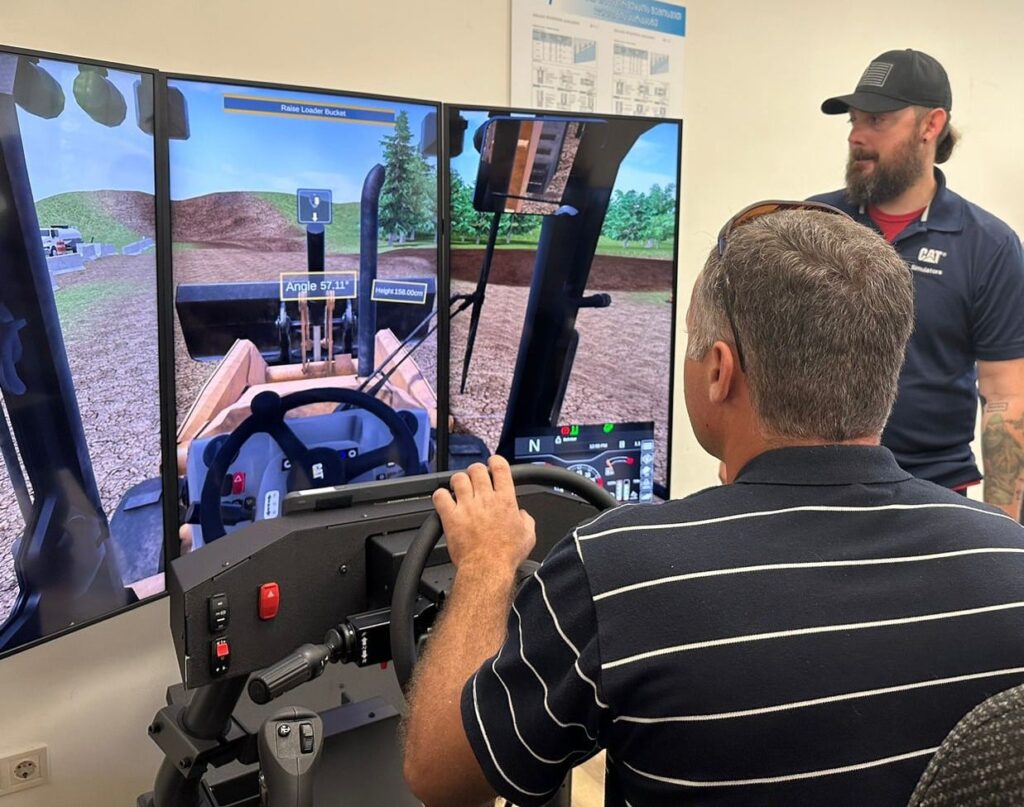
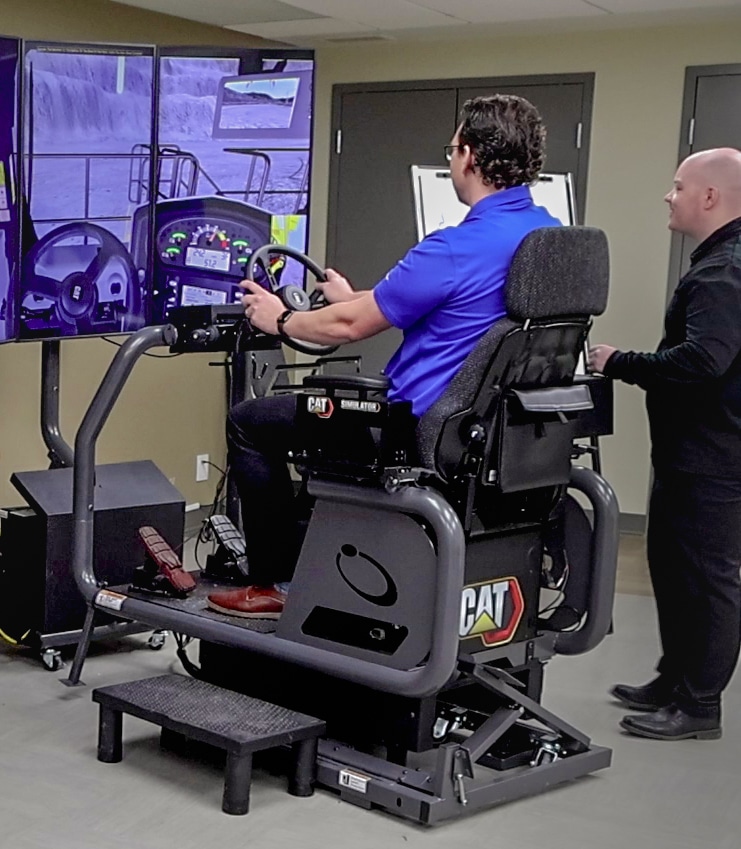
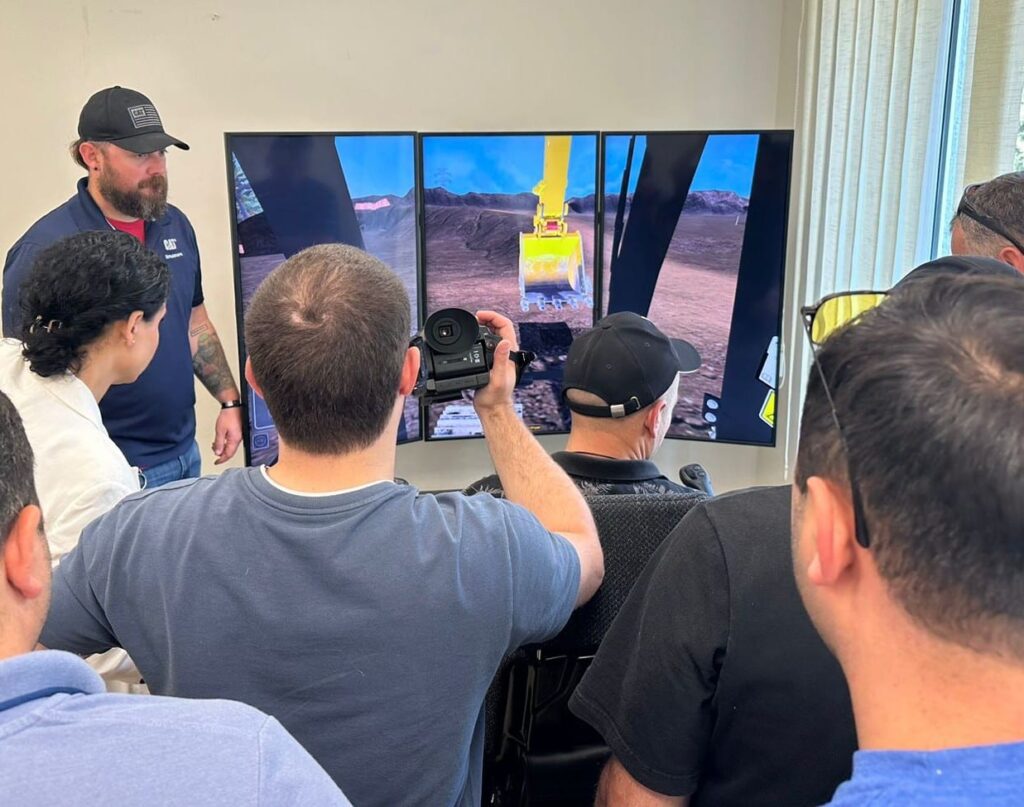
Developed in direct response to industry demand and extensive research, and in consultation with construction companies, the 4.5-month, 600-hour training course, which features Cat® Simulators Motor Grader, Backhoe Loader and Hydraulic Excavator systems, has become one of its most sought-after offerings.
“We designed the program to be short-term because the industry needs skilled workers quickly,” said Zakarashvili. “We purchased Cat Simulators and built the curriculum around them.”
The decision to use Cat Simulators was strategic and symbolic. “Our program was a USAID-funded initiative,” said Zakarashvili, who explained that the team carefully researched the Georgian market and found that Cat equipment was widely used and valued by Georgian businesses. “Because the businesses use Cat equipment, it made sense to train students with Cat Simulators.”
The program blends classroom theory, simulator-based training and real-world experience. Students receive approximately 50 hours of classroom-based theory instruction, followed by 30 hours of hands-on simulator training each week on Cat Simulators for Motor Grader, Backhoe Loader and Hydraulic Excavator systems. It concludes with two weeks of immersive, hands-on experience at actual construction sites.
“We’re giving students access to real machines and real environments. The Cat Simulators prepare them for full immersion on real construction sites,” said Kvinikadze.
In addition to new cohorts, the college launched retraining modules in May 2025. These one-month programs focus specifically on the Backhoe Loader, Motor Grader and Hydraulic Excavator, and provide refresher training for experienced operators.
Workforce Readiness
The program’s impact is already being felt across the region. As graduates enter the workforce, local construction firms are gaining access to a new pool of skilled operators trained to meet the demands of Georgia’s infrastructure boom. The program has begun to address a critical skills gap in Georgia’s rapidly growing construction sector—especially in regions around Zestaponi, where infrastructure projects, such as highway development, are accelerating.
- Rapid Employment Pathways: Graduates are being connected directly with employers, with most securing job placements within one to two months of completing the program. This responsiveness to industry demand reflects the college’s strong ties with BK Construction and other regional firms.
- Industry-Led Curriculum: The program was built on rigorous consultation with construction companies and guided by Ministry of Education policy. This ensures that training aligns with real-world job requirements, from operating machinery to understanding site safety and logistics.
- USAID-Funded Innovation: The use of Cat Simulators systems has elevated the program’s technical sophistication. Students gain hands-on experience on state-of-the-art simulators, preparing them for careers as skilled heavy equipment operators.
- Regional Economic Development: By producing skilled operators locally, the program reduces reliance on foreign labor and supports the long-term sustainability of Georgia’s construction boom. It also provides a pathway for students in a high-demand sector.
Employment support is built into the program’s design. While job placement isn’t immediate, Zakarashvili emphasized that most graduates find work within one to two months.
“We’re actively connecting graduates with employers. We’re not just training workers, we’re building futures. This program is a response to real industry needs, and it’s already changing lives,” summed up Zakarashvili.