Wright Brothers Construction uses Cat Simulators to entice, build a stronger workforce
Wright Brothers Construction has long been known for tackling some of the Southeast’s most complex civil construction projects. From highways and bridges to large-scale earthmoving operations, the company’s success depends on a steady pipeline of skilled, safety-minded heavy equipment operators. To strengthen that pipeline and accelerate training, Wright Brothers has integrated Cat® Simulators into its operator development program, providing new hires and seasoned employees with a safe, efficient way to learn the fundamentals of machine operation.
Training That Mirrors the Real Job Site
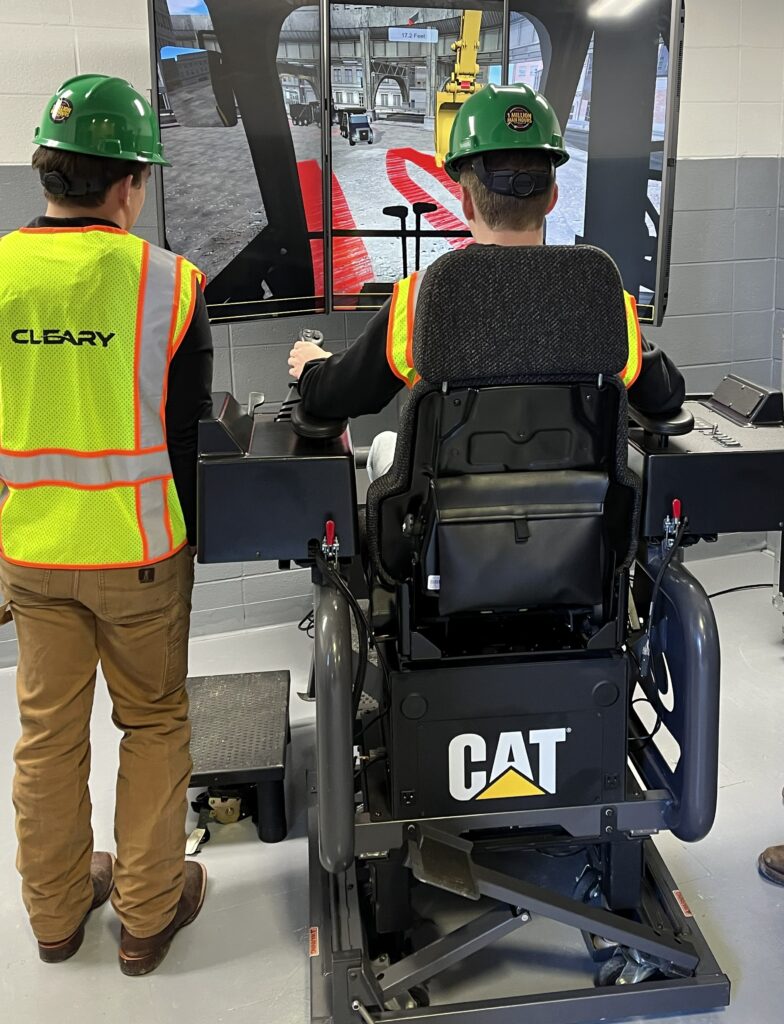
Every Cat Simulators system features authentic Cat® controls, machine response and real-world job site conditions. For Wright Brothers, this realism is essential. Operators can practice real-world tasks in an environment that mirrors the challenges they’ll face on the job site.
Mike Morningstar, construction manager of Wright Brothers, sees the simulators as a foundational part of their training pipeline.
“We give students real-life, hands-on training so they understand exactly what we expect from a heavy equipment operator,” he said. “Part of that training happens on our four Cat Simulators, which we use in the classroom to teach the basics of machine operation, walkarounds and fluid checks.
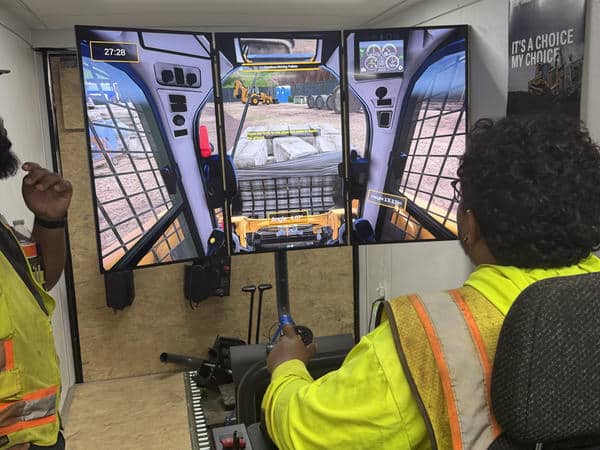
“After about two and a half weeks on our Excavator, Dozer, Off-road Truck and Compact Track Loader simulators, we move them out to our 70-acre training field, where they apply those skills on stockpiles, hauling, pipe installation and the fundamentals of construction,” he said, adding that the simulators play a major role in preparing them for that next step.
Workforce Development
Morningstar said the long‑term results speak for themselves.
“One of the biggest advantages of using Cat Simulators is the impact they’ve had on our high‑school operator pipeline. In the four years we’ve run this program, 118 students have come through it. At the end of each semester, we hold a signing‑day graduation, just like when a student commits to a college, for both our morning and afternoon classes.
“Out of those 118 students, 62 have signed on with Wright Brothers, and 41 of them are still working with us today. Some have been here four years, some just a few months, and seven have already advanced into foreman roles. The simulators play a major part in preparing them for that kind of long‑term success.”
“One of the biggest advantages of using Cat Simulators is the impact they’ve had on our high‑school operator pipeline.”
Mike Morningstar
According to Morningstar, the simulators also help undecided students see a future in the construction industry.
“For students who are on the fence about whether construction is the right path, getting time on the simulator often makes the decision for them. When they realize that in a year or two, they could be doing this work in the field and earning a good living, it usually pushes them off the fence and into our yard.”
He added, “About 80 to 85% of the students who come through our program already know they want to be in construction. There’s no hesitation for them. They know what they want, and that’s why they’re here.”
A Safer, More Cost‑Effective Way to Train
Safety is a top priority for Wright Brothers, and training operators using simulators plays a critical role in reinforcing safe operating habits. Trainees can practice hazard recognition, proper machine positioning, and safe operating techniques without the risks associated with live equipment. Mistakes become learning opportunities, not costly incidents.
Simulators also reduce fuel consumption, machine wear and downtime that comes with traditional on‑equipment training. By shifting early‑stage learning to Cat Simulators, Wright Brothers keeps its fleet productive while continuing to develop new talent.
“We have an 18‑foot trailer that has one of our simulators in it, which I can switch between three different pieces of equipment…One of the things we really appreciate is how easy it is to switch the convertible pods from one machine to another. It literally takes one person about 10 minutes to change over, and you’re ready to train on a completely different piece of equipment.”
Building Confidence and Competence for the Future
The simulators give operators the chance to build confidence long before they step into a machine on a live job site. Trainees get hands‑on experience with authentic Cat controls and work through scenario‑based exercises that mirror real job site tasks.
“The CTL, especially with the VR, is the most realistic simulator experience I’ve ever used. It’s fantastic,” Morningstar said.
Each simulator session generates performance metrics that help instructors track progress and identify areas where additional coaching is needed. Because operators can repeat exercises without production pressure, they develop consistency, accuracy and muscle memory much faster.
By integrating Cat Simulators into its training program, Wright Brothers Construction is building a stronger, safer and more capable workforce.
“Training our current employees and helping them understand how important they are to this company is my focus right now,” Morningstar said.
Wright Brothers continues to demonstrate that investing in people—and giving them the right tools to succeed—is the foundation of long‑term operational excellence.
Virtual Reality for Paving
Simformotion™ LLC, Peoria, Illinois, released the Cat® Simulators VR Paving system in March 2025. Set in a highway construction site environment, the VR-based training system teaches learners how to operate the paver and roller, including inspecting the machine, paving the highway, compacting asphalt and more.
As discussed in the adjacent article, simulators offer a safe, cost-effective training solution for heavy equipment operator training programs. Students and operators can train anytime and anywhere using simulations without the need to take a costly machine out of production or worry about the weather. Additionally, the Cat Simulators VR Paving system adds flexibility to programs because it is portable; you can move it from a training room to a trailer to satellite locations.
A spokesperson for Simformotion explained that the VR Paving system was designed to address the issues of high employee turnover and the need for hands-on training. “This immersive simulation enables learners to familiarize themselves with essential equipment controls, material management and safety protocols in a realistic, controlled environment. By reducing the learning curve and enhancing safety practices, we empower learners to transition smoothly into their roles, ultimately increasing productivity and reducing costs on the jobsite.”
The Cat Simulators VR Paving system features an exclusive walkaround machine inspection module and includes SimU Campus™, a built-in reporting software. SimU Campus records and generates reports of learners’ simulation sessions and compares their performance to Caterpillar benchmarks.
The simulator’s online companion SimScholars® curriculum is a one-to-one match with the simulator training exercises and can be used in the classroom or for remote learning. The interactive, turn-key training curriculum features instructor course guides, learner guides, videos, quizzes and more. By integrating the Cat Simulators VR Paving system with SimScholars curriculum, training programs can provide a unique, blended learning experience. The Cat Simulators VR Paving system includes a Meta Quest 3 VR headset, controllers and simulation software, 24/7 technical support and a subscription to SimScholars curriculum.
Note: Original article was written by Kim Roberts AsphaltPro Magazine | Wright Brothers Builds its Workforce with Cat Simulators