A Clear Path Into the Construction Industry
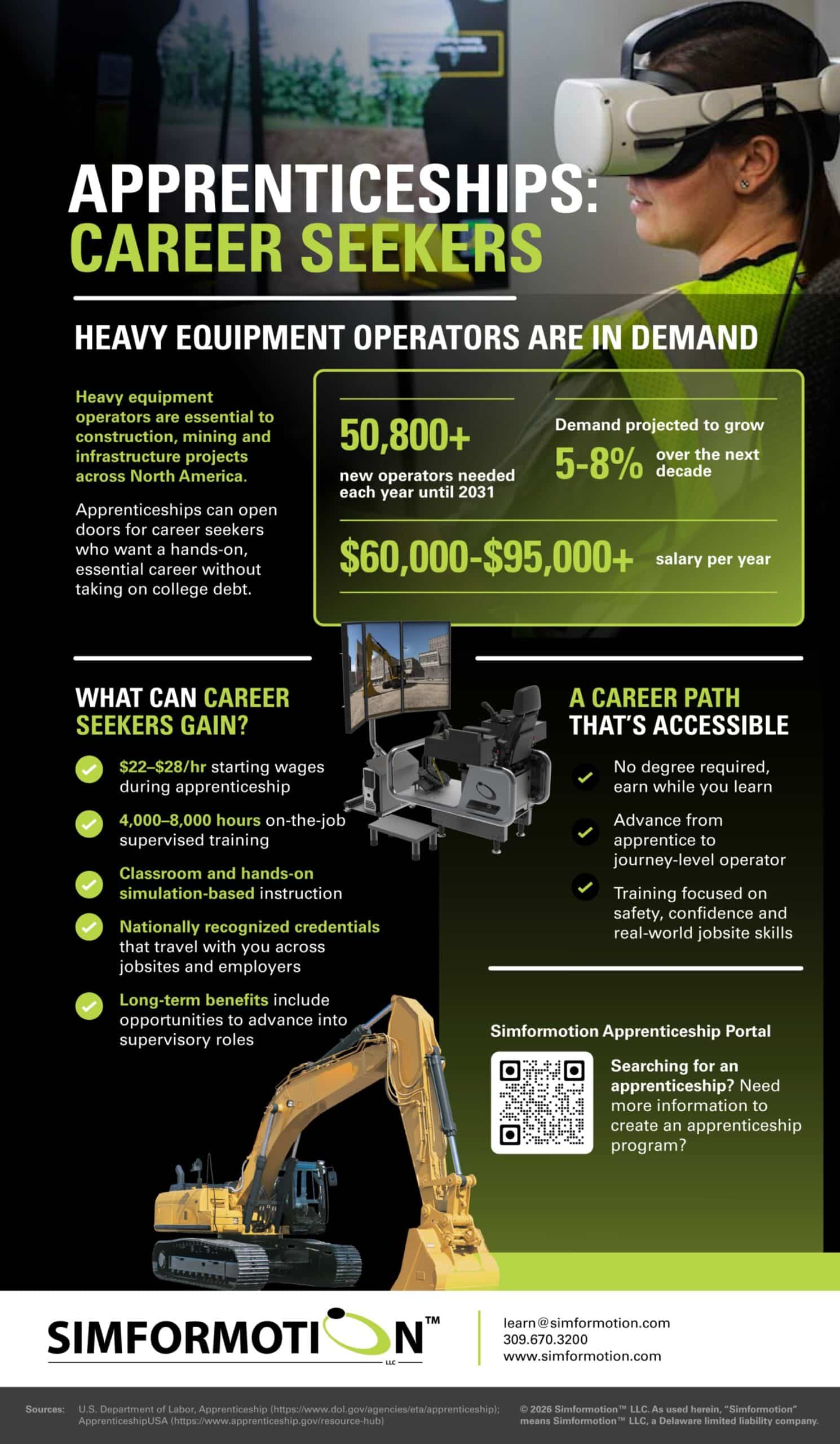
For many people exploring their next career, whether starting out, returning to the workforce, or moving into a new field, the path ahead can feel uncertain. Apprenticeships offer a refreshing alternative: a way to learn, earn and grow at the same time.
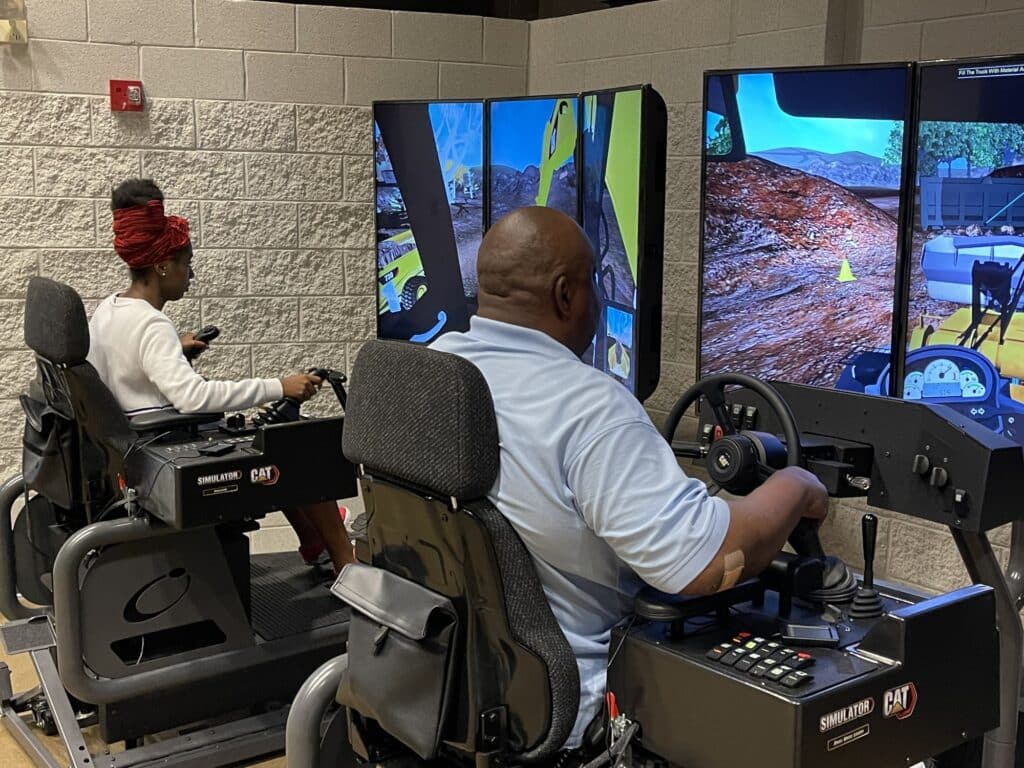
In construction, apprentices are hired as employees from day one. They learn on the job, gaining practical skills that align with real-world project needs. Simulation-based training helps heavy equipment operator apprentices build confidence early by practicing in a safe, controlled environment before operating live equipment.
Building Skills That Match Industry Needs
Working with regional business and industry partners, Tennessee College of Applied Technology (TCAT) Knoxville recently expanded its Heavy Equipment Operator (HEO) program to include an apprenticeship option that is already strengthening the talent pipeline across East Tennessee.
The expansion gained momentum when East Tennessee Turf and Landscape in Morristown, Tenn., needed registered HEO apprenticeship training. The company wanted to hire an operator through a federal grant, but needed an active apprenticeship program to qualify. To meet this need, TCAT created three apprenticeship pathways: Heavy Equipment Operator, CDL Driver and Labor, which includes industrial electricity and plumbing training.
TCAT Knoxville’s established HEO program, built around Cat® Simulators systems, anchors the apprenticeship experience. “The three-year apprenticeship focuses on training heavy equipment operators using our Cat Simulators, including the Articulated Truck, Dozer, Excavator and Advanced Excavator,” said Sally Porter, TCAT Knoxville’s Strategic Impact Coordinator. She added that students gain valuable experience through hands-on simulator training and instructor-led courses.
Employers across the region are already seeing the benefits. Harrison Construction, based in Knoxville, Tenn., has sent candidates through the HEO training and then hired them into full-time roles. Harrison Estimating Manager Matthew Justice explained, “They’re learning the fundamentals of operating equipment on the simulators, understanding the motions and the feel of the equipment.”
He added, “They are also learning what they need to care about, like what’s my fuel burn? What are my cycle times? How am I functioning? What are the metrics that matter when running this piece of equipment?”
Justice sees the long-term value clearly. “The TCAT apprenticeship training is an example of developing training that helps now as well as five, 10 and 15 years down the road. It allows everyone to connect with the construction industry and learn how to become a heavy equipment operator.”
A Model for Sustainable Growth
Apprenticeships also reduce financial barriers. Participants earn wages from day one, and each program includes a defined training plan, mentorship, and clear milestones. This structure gives career seekers direction, stability, and a sense of progress.
While apprenticeships now include industries such as healthcare, IT, logistics, energy, hospitality, construction and mining, the construction industry continues to stand out for its strong demand and long-term opportunities. Resources like the Simformotion Apprenticeship Portal can help individuals explore these pathways and understand what each role requires.
For many, completing an apprenticeship marks the start of sustained career growth. Graduates often advance to higher-level roles, earn additional credentials, and build long-term careers operating the equipment that keeps infrastructure projects moving. It is a pathway that supports individuals today and strengthens the construction workforce for years to come.